Bringing an AI-Generated Design to a Tattoo Artist: What to Expect
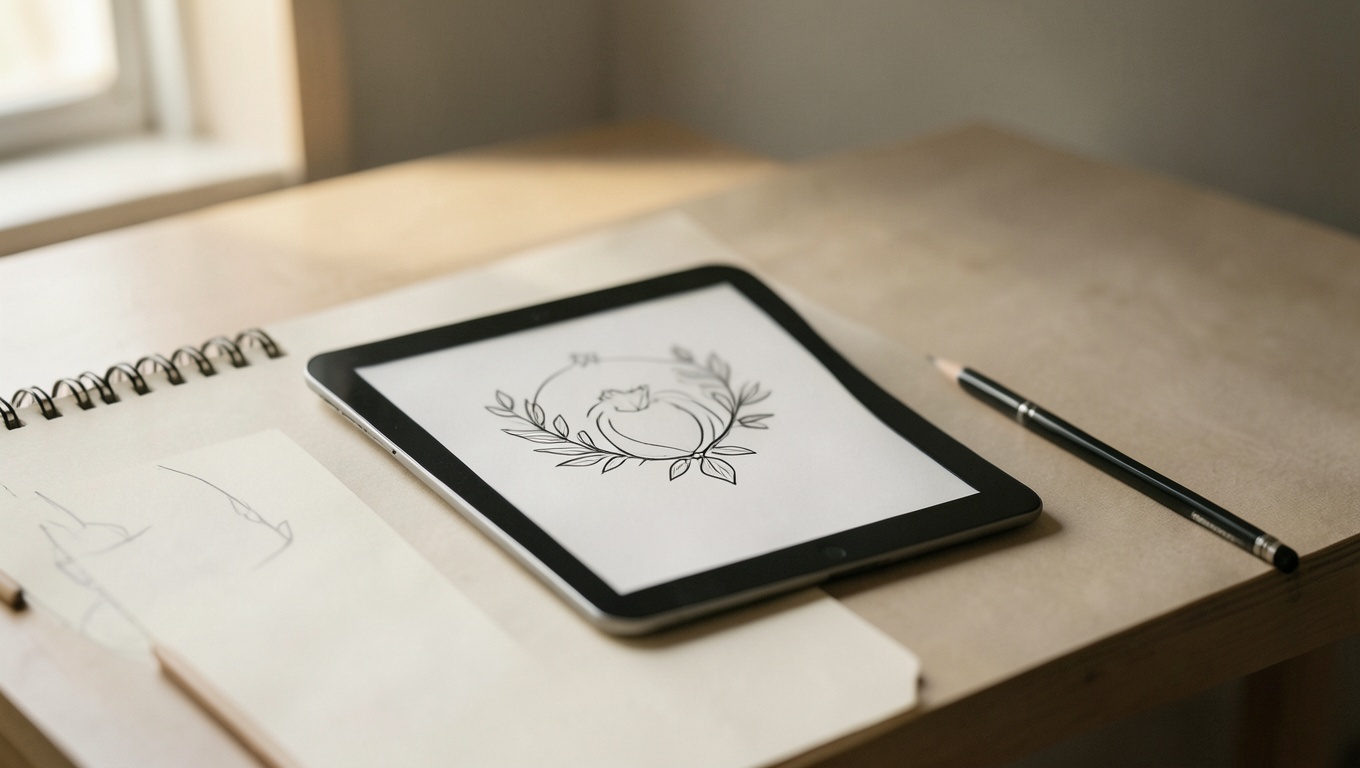
Quick answer: Yes, you can bring an AI-generated design to an artist, and most are happy to work from one — but treat it as a reference, not a finished stencil. AI images often can’t be tattooed exactly as generated because of things a screen hides: compositions that don’t wrap around a limb, detail too fine to hold in skin, and impossible-to-ink artefacts. The best results come from using AI to explore and communicate an idea, then letting the artist adapt it for real skin.
AI design tools have changed how people arrive at a tattoo idea. Instead of struggling to describe what’s in your head, you can generate a dozen versions and point at the one that’s closest. That’s genuinely useful — but there’s a live debate in the tattoo world about what happens when you bring one of those images to an artist, and a lot of misunderstanding on both sides. Here’s the honest picture.
What artists actually think
The caricature is that tattoo artists hate AI. The reality is more nuanced and more positive than the loudest online arguments suggest. Most professional artists now treat AI as a tool in the process, not a threat or a cheat:
- It’s a fast way for a client to explore directions and land on a concept, which shortens the consultation and reduces the “I’ll know it when I see it” back-and-forth.
- It helps people who struggle to describe or draw finally show what they mean.
- Many artists use these tools themselves to sketch options and present clients with several creative directions.
What artists push back on is the expectation that they’ll copy an AI image pixel-for-pixel onto skin. That’s not snobbery — it’s because the image usually can’t be tattooed as-is, and because a good artist’s value is in interpretation, not tracing. Come in saying “here’s the idea and feeling, help me make it work,” and almost every artist is on board. Come in saying “tattoo exactly this,” and you’ll meet resistance rooted in real craft problems.
Why an AI image often can’t be tattooed as-is
A tattoo design and a nice picture are different things, and AI generates the second. The gap shows up in specific, physical ways:
- It doesn’t wrap the body. AI composes for a flat rectangle. A design that looks balanced on screen may distort badly across a curved forearm, a shoulder, or a ribcage. Artists design for the placement, adjusting the composition so it flows with the body — something a flat image never accounts for.
- The detail is too fine to hold. Skin isn’t paper. Ink spreads slightly over the years, so ultra-fine detail and tightly packed lines that look crisp on screen blur into a smudge over time. An artist will simplify and space out the design so it still reads in ten years. Our guide on whether fine line tattoos blur explains the physics.
- It contains impossible artefacts. AI images frequently have subtly broken anatomy, lines that don’t connect, gradients that can’t be tattooed, or “detail” that’s really just visual noise. An artist has to redraw those parts to make them actually inkable.
- It’s not really a line drawing. Most tattoos start from clean linework; AI outputs a rendered image. Translating that into a tattoo-ready design is real work, not a copy job.
How to use AI design well
Used the right way, an AI design is one of the best briefing tools you can bring. The approach:
- Generate for exploration. Make lots of versions to find the composition, subject, and mood you respond to. This is where tools like the TattooEngine generator earn their place — turning a vague idea into something you can point at.
- Bring it as one reference among a few. Pair the AI image with real photos of the subject and examples of the style and line weight you want, exactly as you would any other reference. It communicates the direction, not the final artwork.
- Say what you love about it. “I want this composition and mood, but simpler and in fine line” gives the artist a clear target. The image plus your explanation is far stronger than the image alone.
- Let the artist redraw it. Expect — and want — them to adapt it for your body, your skin, and longevity. The redraw is the point. An artist improving your AI concept is the good outcome, not a failure of the tool.
The mindset that works: AI gets you to a clear, shared starting point faster than words alone ever could. The artist takes it from a picture to a tattoo. Both steps matter, and the second one is why the result will actually look good on your skin in a decade.
A note on originality and respect
Two small things worth keeping in mind. First, an AI concept built from your own idea is yours to explore freely, but don’t ask an artist to replicate a specific living artist’s identifiable style or a particular existing tattoo — that’s a boundary most artists hold, AI or not. Second, lead with collaboration. The artists who are enthusiastic about AI are the ones whose clients treat them as creative partners, not print shops. Bring the idea, respect the craft, and you’ll get the best of both.
Can I bring an AI-generated tattoo design to a tattoo artist?
Yes, and most artists are happy to work from one — as a reference and starting point rather than a finished stencil to copy exactly. AI is great for exploring and communicating an idea, but the image almost always needs adapting for real skin: composing it to wrap the body, simplifying detail that won’t age well, and fixing artefacts. Bring it as part of your brief and expect the artist to redraw it.
Why won’t my artist just tattoo the AI image exactly?
Because a screen image and a tattoo design are different things. AI composes for a flat rectangle, so it doesn’t account for how the design wraps a curved body; it often includes detail too fine to hold in skin, which blurs over years; and it frequently contains broken anatomy or lines that can’t actually be inked. The artist redraws it to make it work on your body and last — that interpretation is exactly what you’re paying them for.
Do tattoo artists dislike AI designs?
Most don’t — the online arguments are louder than the real sentiment. Many artists use AI tools themselves and appreciate that clients arrive with a clearer idea. What they push back on is being asked to copy an AI image pixel-for-pixel, because it usually can’t be tattooed as-is and because their skill is in interpretation, not tracing. Treat them as a creative partner adapting your concept and you’ll find most are genuinely on board.
How do I use an AI tattoo design the right way?
Generate lots of versions to find the composition and mood you love, then bring the best one as one reference among a few — alongside real photos of the subject and examples of the style you want. Explain what specifically you like about it (“this composition, but simpler, in fine line”), and let the artist redraw it to fit your body and age well. The AI gets you to a clear starting point; the artist turns it into an actual tattoo.
Will an AI tattoo design look good once it’s actually tattooed?
Only after an artist adapts it. Straight from the generator, an AI image often has detail that will blur, a composition that won’t sit right on a curved body, and small artefacts that can’t be inked. Once a skilled artist simplifies it, spaces the linework, and composes it for your placement, it can look excellent and hold up over time. The quality of the final tattoo depends on that human step, not on the AI image alone.
Frequently asked questions
Can I bring an AI-generated tattoo design to a tattoo artist?
+
Yes, and most artists are happy to work from one — as a reference and starting point rather than a finished stencil to copy exactly. AI is great for exploring and communicating an idea, but the image almost always needs adapting for real skin: composing it to wrap the body, simplifying detail that won’t age well, and fixing artefacts. Bring it as part of your brief and expect the artist to redraw it.
Why won’t my artist just tattoo the AI image exactly?
+
Because a screen image and a tattoo design are different things. AI composes for a flat rectangle, so it doesn’t account for how the design wraps a curved body; it often includes detail too fine to hold in skin, which blurs over years; and it frequently contains broken anatomy or lines that can’t actually be inked. The artist redraws it to make it work on your body and last — that interpretation is exactly what you’re paying them for.
Do tattoo artists dislike AI designs?
+
Most don’t — the online arguments are louder than the real sentiment. Many artists use AI tools themselves and appreciate that clients arrive with a clearer idea. What they push back on is being asked to copy an AI image pixel-for-pixel, because it usually can’t be tattooed as-is and because their skill is in interpretation, not tracing. Treat them as a creative partner adapting your concept and you’ll find most are genuinely on board.
How do I use an AI tattoo design the right way?
+
Generate lots of versions to find the composition and mood you love, then bring the best one as one reference among a few — alongside real photos of the subject and examples of the style you want. Explain what specifically you like about it (“this composition, but simpler, in fine line”), and let the artist redraw it to fit your body and age well. The AI gets you to a clear starting point; the artist turns it into an actual tattoo.
Will an AI tattoo design look good once it’s actually tattooed?
+
Only after an artist adapts it. Straight from the generator, an AI image often has detail that will blur, a composition that won’t sit right on a curved body, and small artefacts that can’t be inked. Once a skilled artist simplifies it, spaces the linework, and composes it for your placement, it can look excellent and hold up over time. The quality of the final tattoo depends on that human step, not on the AI image alone.
Related designs
Free galleries from the same corner of the site.
Keep reading
How to Describe Your Tattoo Idea So You Get What You Pictured
The gap between the tattoo in your head and the one on your skin is usually a communication gap. Here is how to brief an artist so you get what you pictured — starting with the feeling, not the picture — plus which references help and which hurt.

When Can I Swim, Work Out, Shower, and Sunbathe After a Tattoo?
You can shower in 24 hours, but swimming, hard workouts, and sunbathing all need to wait weeks. Here is one clear table of how long to wait for each, and the reason behind every limit so you know which ones actually matter.

How to Choose a Tattoo Artist: Portfolios, Red Flags, and What to Ask
The artist matters more than the design. Here is how to read a portfolio like a professional, the red flags that actually matter, and the questions to ask at a consultation — so you pick someone whose work will still look good in ten years.
