Fine Line Tattoos: Will They Blur? A Straight Answer Before You Commit
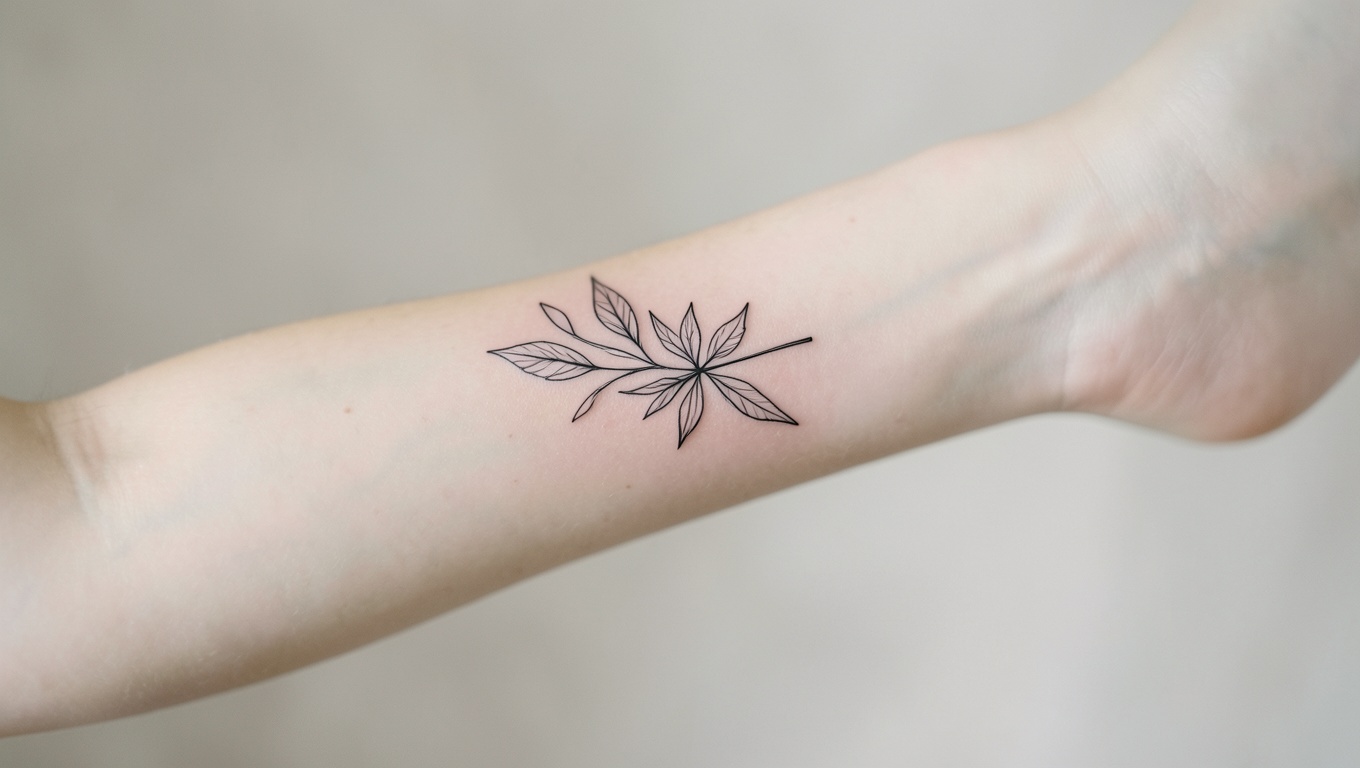
Quick answer: Fine line tattoos do fade and soften faster than bold work — that’s the honest trade for their delicacy. But “will blur into nothing” is a myth. Well-executed fine line on a good placement, protected from the sun, holds up for years and touches up cleanly. What ages badly is micro-detail crammed into a small space. Choose spacing over density, a low-friction spot, and an artist with healed fine-line photos, and you’ll get one that lasts.
Fine line is the defining tattoo style of the moment — delicate botanicals, single-line drawings, tiny script — and it’s also the style people worry about most. The internet is full of “my fine line tattoo blurred after two years” posts, right next to gorgeous fresh ones. Both are true, and the difference between them is entirely predictable. Here’s the straight version so you can decide with your eyes open.
Do fine line tattoos actually blur?
They soften faster than bold tattoos, yes. The reason is physical: ink spreads very slightly in living skin over the years, and a fine line has almost no margin to absorb that spread before it starts to lose crispness. A bold line can soften by the same tiny amount and still read as a clean line; a hair-thin one can’t. Add UV fading — which hits thin, lightly-saturated lines harder — and fine line simply has less in reserve.
But “fades faster” is not “vanishes.” A well-done fine line tattoo, sensibly placed and sun-protected, stays lovely for many years and refreshes cleanly with an occasional touch-up. The horror stories almost always involve one specific mistake.
The real culprit: micro-detail in a small space
What genuinely blurs into an unreadable smudge isn’t fine line as such — it’s too much detail packed too tightly. A tiny portrait, a coin-sized piece with a dozen elements, fine text at a small size: these have lines so close together that even a fraction of spread merges them. Give it a few years and the gaps close up, and what was a delicate drawing becomes a dark blob.
The same subject at a slightly larger size, with more space between the lines, ages completely differently. It’s not the thinness of the line that kills it — it’s the lack of room for the line to soften without touching its neighbour. Spacing, not scale of detail, is the thing that determines whether a fine line piece survives.
Fine line that holds up
You can absolutely have delicate work that lasts. The levers:
- Space over density. A simpler design with breathing room ages far better than an intricate one crammed small. If you love a detailed image, size it up so the detail has room.
- Placement matters double. Fine line is least forgiving on high-friction, high-movement, sun-exposed spots — fingers, hands, feet, inner wrist. The inner forearm, upper arm, shoulder, back and thigh treat it much more kindly. Our guide on why tattoos fade covers the friction and sun factors.
- The right artist. Fine line is a genuine specialism — consistent, confident thin lines at the correct needle depth are hard, and a line laid too shallow fades fast while one too deep spreads (a “blowout”). Look specifically for an artist’s healed fine-line photos, not just fresh ones. Our guide on choosing an artist explains why healed work is the real test.
- Sun protection, religiously. Thin lines have the least pigment to lose, so UV thins them fastest. Sunscreen on a healed fine-line tattoo isn’t optional if you want it to last.
Touch-ups are part of the deal — and that’s fine
Here’s the reframe that helps most people: a fine line tattoo is a little more like a maintained thing than a set-and-forget one. Where a bold traditional piece might go decades untouched, a delicate fine-line design may want a refresh every several years to keep its crispness. That’s not a defect — it’s the cost of the aesthetic, and a touch-up on clean, well-spaced fine line is quick and straightforward. If you love the delicate look, accept the light maintenance as the price and it’s a perfectly good choice. Our touch-up guide covers what to expect.
Decide honestly: if you want a tattoo you’ll never think about again, fine, delicate work on your hand is the wrong pick. If you love the style and are happy to protect it from the sun and refresh it occasionally, a well-designed, well-placed fine line piece will reward you for years. Go in knowing which of those you are.
Blowouts: a different problem people confuse with blurring
Not all fuzziness is ageing. A blowout is a specific technical fault where ink is deposited too deep, spreading beneath the skin and creating a blue-grey haze or bleed around the lines. It shows up during or shortly after healing rather than gradually over years, which is how you tell the two apart: natural softening takes many years and affects the whole tattoo evenly, while a blowout appears early and usually affects specific lines or areas.
Fine line is more prone to blowouts than bold work, because the margin for error on needle depth is so much smaller — and thin skin areas like the inner wrist, ankle, and fingers are where they happen most. This is another reason the artist choice matters so much for this style: consistent, correct depth across delicate linework is genuinely hard, and it’s exactly what a portfolio of healed fine-line work demonstrates. If you do get a blowout, it can sometimes be improved by reworking the design around it or incorporating it, but it can’t simply be undone — prevention through a skilled artist is the only real answer.
Do fine line tattoos fade faster than other tattoos?
Yes, somewhat — thin lines have very little margin before the natural spread of ink and UV fading start to soften them, so they lose crispness sooner than bold work. That doesn’t mean they blur into nothing; a well-placed, sun-protected fine line tattoo stays lovely for years. It simply means fine line asks for a bit more care — good placement, diligent sunscreen, and the occasional touch-up — to keep looking its best.
Why do some fine line tattoos turn into a blur?
Almost always because too much detail was packed into too small a space. When lines sit very close together, even the tiny amount that ink spreads over the years is enough to merge them, turning a delicate design into a dark smudge. The same design at a slightly larger size, with room between the lines, ages fine. It’s the lack of spacing, not the thinness of the line itself, that causes the worst blurring.
Where should I get a fine line tattoo so it lasts?
Favour low-friction, low-movement, easily-covered areas — the inner forearm, upper arm, shoulder, back, and thigh all treat fine line kindly. Avoid fingers, hands, feet, and the inner wrist if longevity is your priority, because constant friction and sun exposure wear thin lines down fastest. Placement matters even more for fine line than for bold work, so it’s worth weighing heavily when you choose.
How often do fine line tattoos need touch-ups?
It varies with placement, sun exposure, and how delicate the design is, but many fine line pieces benefit from a refresh every several years to stay crisp, versus decades for bold work. Think of it as light maintenance rather than a flaw — a touch-up on clean, well-spaced fine line is quick. If a design is well made and well cared for, it can go a good while; crammed detail on a busy spot will need attention sooner.
Are fine line tattoos a bad idea?
Not at all — they’re a beautiful, popular style that can age gracefully when done right. The key is honest expectations: choose spacing over cramming, a sensible placement, an artist with healed fine-line work, and commit to sun protection and occasional touch-ups. If you want something you’ll never have to think about again, a delicate piece on a high-wear spot is the wrong choice; if you love the look and will care for it, it’s a great one.
Frequently asked questions
Do fine line tattoos fade faster than other tattoos?
+
Yes, somewhat — thin lines have very little margin before the natural spread of ink and UV fading start to soften them, so they lose crispness sooner than bold work. That doesn’t mean they blur into nothing; a well-placed, sun-protected fine line tattoo stays lovely for years. It simply means fine line asks for a bit more care — good placement, diligent sunscreen, and the occasional touch-up — to keep looking its best.
Why do some fine line tattoos turn into a blur?
+
Almost always because too much detail was packed into too small a space. When lines sit very close together, even the tiny amount that ink spreads over the years is enough to merge them, turning a delicate design into a dark smudge. The same design at a slightly larger size, with room between the lines, ages fine. It’s the lack of spacing, not the thinness of the line itself, that causes the worst blurring.
Where should I get a fine line tattoo so it lasts?
+
Favour low-friction, low-movement, easily-covered areas — the inner forearm, upper arm, shoulder, back, and thigh all treat fine line kindly. Avoid fingers, hands, feet, and the inner wrist if longevity is your priority, because constant friction and sun exposure wear thin lines down fastest. Placement matters even more for fine line than for bold work, so it’s worth weighing heavily when you choose.
How often do fine line tattoos need touch-ups?
+
It varies with placement, sun exposure, and how delicate the design is, but many fine line pieces benefit from a refresh every several years to stay crisp, versus decades for bold work. Think of it as light maintenance rather than a flaw — a touch-up on clean, well-spaced fine line is quick. If a design is well made and well cared for, it can go a good while; crammed detail on a busy spot will need attention sooner.
Are fine line tattoos a bad idea?
+
Not at all — they’re a beautiful, popular style that can age gracefully when done right. The key is honest expectations: choose spacing over cramming, a sensible placement, an artist with healed fine-line work, and commit to sun protection and occasional touch-ups. If you want something you’ll never have to think about again, a delicate piece on a high-wear spot is the wrong choice; if you love the look and will care for it, it’s a great one.
Related designs
Free galleries from the same corner of the site.
Keep reading
Why Tattoos Fade — and the Five Things That Actually Slow It
Every tattoo fades a little over time, but how fast is largely in your control. Here are the five real drivers of fading — sun, placement, colour, line weight, and skin — and what genuinely slows each one down.

Bringing an AI-Generated Design to a Tattoo Artist: What to Expect
AI tattoo designs are a great way to explore ideas, but they are a starting point, not a stencil. Here is what tattoo artists actually think, the real reasons an AI image often can’t be tattooed as-is, and how to use one well.

How to Describe Your Tattoo Idea So You Get What You Pictured
The gap between the tattoo in your head and the one on your skin is usually a communication gap. Here is how to brief an artist so you get what you pictured — starting with the feeling, not the picture — plus which references help and which hurt.
