Why Tattoos Fade — and the Five Things That Actually Slow It
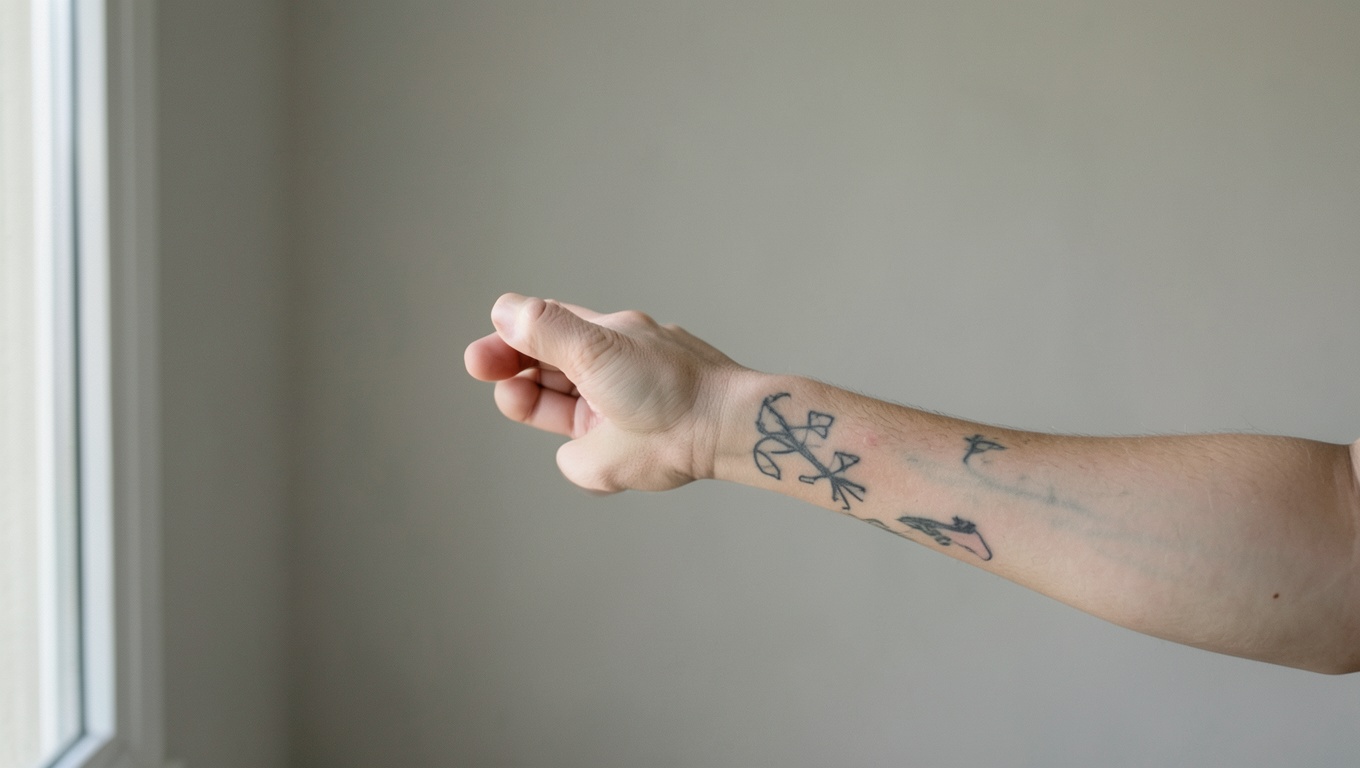
Quick answer: Tattoos fade because ink sits in living skin that renews, moves, and is broken down by UV. The five things that drive it are sun exposure, placement, ink colour, line weight, and your skin and aftercare. Of these, UV is by far the biggest — daily sunscreen on a healed tattoo does more to preserve it than anything else. Bold, well-spaced, black-heavy designs on low-friction, covered areas last longest.
Every tattoo softens over the years — that’s normal and not a flaw. But the difference between a piece that still looks sharp at fifteen years and one that’s a grey blur at five is mostly down to factors you can influence, some before you’re even tattooed. Here are the five real drivers of fading and what actually slows each one.
1. Sun exposure — the biggest factor by far
UV light breaks down tattoo pigment, plain and simple. Sun-exposed areas — hands, forearms, neck, lower legs — fade noticeably faster than parts that stay covered, and years of unprotected summer sun will grey and blur a tattoo faster than anything else on this list.
What slows it: sunscreen, forever. Once your tattoo is fully healed, get in the habit of applying a high-SPF, fragrance-free sunscreen to it whenever it’ll be in the sun. This single habit outweighs every special balm and aftercare product combined. During healing, keep it out of the sun entirely — the timings are in our guide on when you can sunbathe after a tattoo.
2. Placement — friction is the enemy
Where a tattoo sits determines how much the skin moves and rubs. High-friction, high-movement areas wear ink down mechanically:
- Fastest-fading spots: hands, fingers, feet, elbows, and inner areas that rub — constant movement and friction, plus thin skin that renews quickly.
- Longest-lasting spots: upper arm, shoulder, back, thigh — padded, low-friction, and often covered by clothing.
What slows it: mostly a decision you make upfront. If longevity matters to you, favour a lower-friction placement. If your heart is set on a hand or finger tattoo, go in knowing it will need touch-ups more often — that’s the trade, not a failure.
3. Ink colour — not all pigments are equal
Different pigments break down at different rates. As a rule:
| Longevity | Colours |
|---|---|
| Most stable | Black and dark grey — the longest-lasting by a clear margin. |
| Middle | Blues and greens hold reasonably well. |
| Fades first | Reds and oranges shift over time; yellows and whites are the first to go. |
What slows it: understand the trade before you commit. A black-and-grey piece will look crisp far longer than a pastel watercolour one. That doesn’t mean avoid colour — it means choose colour knowing it’ll want touch-ups sooner, and lean on a strong black structure underneath so the design still reads as the brights soften. Our colour vs black and grey guide weighs this in full.
4. Line weight and detail — bold survives
Ink spreads very slightly in the skin over decades, so fine detail closes up while bold work holds its shape. Two tattoos with the same design but different line weights age completely differently: the delicate one blurs, the bold one stays legible.
What slows it: design choices. Bolder lines, more space between elements, and less micro-detail all age better. A design with “visual margin” — room for the lines to soften without merging — keeps its shape for decades. This is the core reason very fine, densely detailed tattoos need the most maintenance; our guide on fine line and blurring covers it directly.
5. Your skin and your aftercare
The living canvas matters too. Well-hydrated, healthy, cared-for skin holds ink better than dry, damaged, or sun-worn skin. And how the tattoo healed in the first place sets its baseline — a piece that scabbed badly or lost ink during healing starts life already compromised.
What slows it: heal it properly (our aftercare routine covers this), then keep the skin moisturised and healthy long-term. Hydrated skin simply displays ink better. None of this reverses fading, but it meaningfully slows it.
If you remember one thing: sunscreen. A bold, well-placed tattoo you protect from UV can look sharp for decades; a delicate, colourful one you bake in the sun can look tired in a handful of years. Most of tattoo longevity is sun protection plus smart choices at the design stage.
Fading isn’t failure — and touch-ups exist
Some softening over the years is natural and even part of a tattoo’s character. When a piece does need refreshing, a touch-up restores it, and most people’s tattoos get one or two over a lifetime. Fading slowly is normal; fading fast usually means sun, friction, or over-delicate design — all of which this guide gives you the levers to manage.
What doesn’t actually cause fading
A few widely-repeated beliefs are worth setting aside, because worrying about the wrong things distracts from the ones that matter:
- Ordinary showering and washing. Once healed, normal washing does nothing to a tattoo. Only prolonged soaking during the initial healing window is a problem.
- Expensive specialist tattoo balms. Keeping skin moisturised helps, but a plain fragrance-free moisturiser does the job. No cream reverses or prevents pigment breakdown — sunscreen is the product that actually matters.
- Exercise and sweating, after healing. Once the skin has closed, sweat is irrelevant to fading. Friction from clothing over decades has a mild effect, but sweat itself doesn’t leach ink.
- Getting older, on its own. Age correlates with fading only because of accumulated sun exposure and skin changes — not because time alone dissolves ink.
The short version: skip the miracle products, and put that attention into sun protection and sensible placement instead. Those two do the overwhelming majority of the work.
What makes tattoos fade the fastest?
Sun exposure, by a wide margin — UV breaks down the pigment, which is why hands, forearms and other exposed areas fade fastest. After that comes friction from high-movement placements like fingers and feet, lighter and warmer ink colours that break down sooner, very fine detail that blurs as ink spreads, and poor healing or dry, sun-damaged skin. Most of these are influenced by choices you make before and after getting tattooed.
Does sunscreen really keep a tattoo from fading?
Yes — it’s the single most effective thing you can do. UV is the biggest cause of tattoos greying and blurring over time, so applying a high-SPF, fragrance-free sunscreen to a healed tattoo whenever it’s in the sun genuinely preserves it for years longer. It matters far more than any special tattoo balm or aftercare product. During healing, keep the tattoo out of the sun entirely and start sunscreen once the skin has closed.
Which tattoo colours last the longest?
Black and dark grey last the longest by a clear margin, which is why black-and-grey tattoos stay crisp for decades. Blues and greens hold up reasonably well in the middle, while reds and oranges shift over time and yellows and whites fade first. Colour tattoos are absolutely worth getting — they just tend to need touch-ups sooner, and a strong black structure underneath helps the design keep reading as the brights soften.
Do bold tattoos really last longer than fine line ones?
Yes. Ink spreads slightly in the skin over the decades, so bold lines with space between them keep their shape while fine, tightly packed detail closes up and blurs. Two identical designs with different line weights age completely differently. This is why bold, well-spaced work holds up best long term, and why very delicate fine-line tattoos need the most frequent touch-ups to stay sharp.
Can a faded tattoo be restored?
Usually, yes — a touch-up re-saturates the ink and redefines lines that have softened, and most tattoos get one or two refreshes over a lifetime. How well it restores depends on how much the design has spread; bold work refreshes cleanly, while very fine detail that has blurred together may need reworking rather than a simple touch-up. Protecting the tattoo from the sun afterwards is what makes the refresh last.
Frequently asked questions
What makes tattoos fade the fastest?
+
Sun exposure, by a wide margin — UV breaks down the pigment, which is why hands, forearms and other exposed areas fade fastest. After that comes friction from high-movement placements like fingers and feet, lighter and warmer ink colours that break down sooner, very fine detail that blurs as ink spreads, and poor healing or dry, sun-damaged skin. Most of these are influenced by choices you make before and after getting tattooed.
Does sunscreen really keep a tattoo from fading?
+
Yes — it’s the single most effective thing you can do. UV is the biggest cause of tattoos greying and blurring over time, so applying a high-SPF, fragrance-free sunscreen to a healed tattoo whenever it’s in the sun genuinely preserves it for years longer. It matters far more than any special tattoo balm or aftercare product. During healing, keep the tattoo out of the sun entirely and start sunscreen once the skin has closed.
Which tattoo colours last the longest?
+
Black and dark grey last the longest by a clear margin, which is why black-and-grey tattoos stay crisp for decades. Blues and greens hold up reasonably well in the middle, while reds and oranges shift over time and yellows and whites fade first. Colour tattoos are absolutely worth getting — they just tend to need touch-ups sooner, and a strong black structure underneath helps the design keep reading as the brights soften.
Do bold tattoos really last longer than fine line ones?
+
Yes. Ink spreads slightly in the skin over the decades, so bold lines with space between them keep their shape while fine, tightly packed detail closes up and blurs. Two identical designs with different line weights age completely differently. This is why bold, well-spaced work holds up best long term, and why very delicate fine-line tattoos need the most frequent touch-ups to stay sharp.
Can a faded tattoo be restored?
+
Usually, yes — a touch-up re-saturates the ink and redefines lines that have softened, and most tattoos get one or two refreshes over a lifetime. How well it restores depends on how much the design has spread; bold work refreshes cleanly, while very fine detail that has blurred together may need reworking rather than a simple touch-up. Protecting the tattoo from the sun afterwards is what makes the refresh last.
Keep reading

Bringing an AI-Generated Design to a Tattoo Artist: What to Expect
AI tattoo designs are a great way to explore ideas, but they are a starting point, not a stencil. Here is what tattoo artists actually think, the real reasons an AI image often can’t be tattooed as-is, and how to use one well.

How to Describe Your Tattoo Idea So You Get What You Pictured
The gap between the tattoo in your head and the one on your skin is usually a communication gap. Here is how to brief an artist so you get what you pictured — starting with the feeling, not the picture — plus which references help and which hurt.

When Can I Swim, Work Out, Shower, and Sunbathe After a Tattoo?
You can shower in 24 hours, but swimming, hard workouts, and sunbathing all need to wait weeks. Here is one clear table of how long to wait for each, and the reason behind every limit so you know which ones actually matter.
