How Tattoos Age: Your Ink at 5, 10, and 20 Years
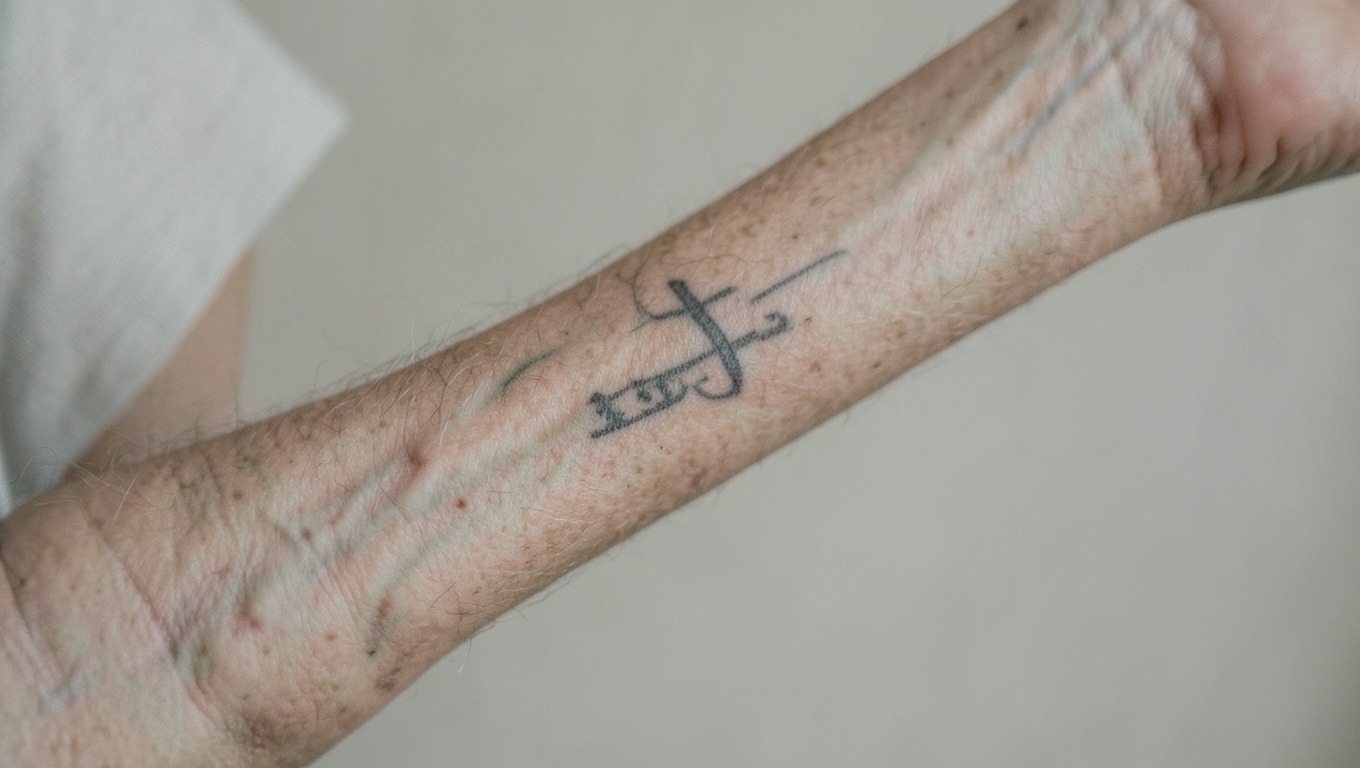
Quick answer: For the first five years a good tattoo stays crisp and bright. Around ten years, lines soften slightly, fine details start to merge, colours mute, and black shifts toward dark grey. By twenty, it has a settled, “lived-in” look — softer and less contrasty, but still clearly legible if it was bold and well-placed. Bold lines, solid black, generous spacing, and low-friction, sun-protected placements age best.
A tattoo isn’t a fixed image — it’s ink held in living skin that renews and moves for the rest of your life, so it changes as you do. Knowing how it changes takes the fear out of the decision and, more usefully, helps you design something that still looks good decades from now rather than just on the day. Here’s the honest timeline.
The timeline
| Age | What it looks like |
|---|---|
| 0–5 years | Peak. Crisp lines, strong contrast, colours near their brightest. Subtle changes may begin late in this window but most people don’t notice them. |
| ~10 years | A “lived-in” look sets in. Lines soften and thicken very slightly, fine details begin to blur together, colour vibrancy drops, and pure black starts reading as dark grey. Reds and yellows have usually faded first. |
| ~20 years | Clearly aged but, if well-made, still legible. Lines have spread and softened, detail has merged further, contrast is muted. A bold, well-spaced design still reads clearly; a delicate, detailed one may have lost definition. |
None of this is sudden — it’s gradual, and much of it is influenced by the choices below rather than being inevitable. Two identical tattoos can look very different at twenty years depending on style, placement, and care.
What ages well, and what doesn’t
The single best predictor of how a tattoo ages is how much visual margin it has — room for lines to soften without the design falling apart.
- Ages well: bold outlines, solid black, strong contrast, simple compositions with space between elements. Traditional and bold blackwork styles are famous for aging gracefully precisely because they’re built with margin. As everything softens equally, a design with room to spare absorbs it and stays readable.
- Ages fast: very fine detail packed tightly, delicate single-line work, tiny lettering, and heavy reliance on light or warm colours. When there’s no margin, a small amount of softening closes the gaps and the design loses its shape. Our guide on fine line and blurring covers this specific case.
Placement and colour, again
Two factors from tattoo longevity generally deserve repeating here because they shape the twenty-year version so strongly:
- Placement. High-friction, high-movement, sun-exposed areas — hands, fingers, feet, forearms, neck — age fastest. Padded, covered, low-movement spots — upper arm, shoulder, back, thigh — hold up best. If you want a tattoo to still look sharp in decades, placement is a lever you pull once and can’t change later.
- Colour. Black and grey age most gracefully; reds and oranges shift; yellows and whites fade first. A colourful tattoo isn’t a mistake, but it will look more muted at twenty years and benefit from touch-ups — our colour vs black and grey guide weighs the choice.
Designing for the version you’ll wear longest
The useful shift in thinking: you’ll wear the aged version of your tattoo far longer than the fresh one. Designing for year twenty rather than the day it’s done leads to better decisions — favour bold over delicate, space over density, black structure under any colour, and a placement that ages slowly. A good artist thinks this way by default, which is another reason their input at the design stage is worth taking seriously.
And protect it. UV is the biggest accelerator of every kind of aging on this list, so lifelong sunscreen on a healed tattoo genuinely changes how it looks decades on. Everything in our guide on what slows fading applies here.
The reassuring part: a well-designed, well-placed, well-cared-for tattoo aging into a softer “lived-in” version isn’t a loss — many people love how their older tattoos look, worn-in like a good leather jacket. Aging gracefully is a design outcome you can plan for, not a fate you’re stuck with.
What changes about you, not just the ink
Tattoo ageing isn’t only about pigment breaking down — the canvas changes too, and it’s the part people rarely consider. Skin loses elasticity over the decades, which subtly shifts how a design sits. Significant weight change, pregnancy, and muscle gain or loss all stretch or compress the skin, and a tattoo placed over an area that changes a lot will distort along with it. Areas most prone to this are the stomach, upper arms, chest, and thighs.
This isn’t a reason for anxiety, but it’s worth a moment’s thought at the planning stage. Designs with organic, flowing shapes tolerate stretching far better than rigid geometry and perfect symmetry, where any distortion is instantly visible — a mandala with precise repeating geometry will show a change in the underlying skin much more obviously than a flowing floral piece would. If you’re planning major body changes, or a tattoo on an area likely to change, mentioning it to your artist lets them choose a composition and placement that will ride it out gracefully.
What does a tattoo look like after 20 years?
By around twenty years a tattoo has a settled, lived-in look: lines have spread and softened, fine details have merged, colours are muted, and pure black reads as dark grey. If it was bold and well-placed to begin with, it’s still clearly legible and often looks characterfully worn-in. If it was very delicate or detailed, it may have lost some definition. How much it changes depends heavily on style, placement, and sun protection over the decades.
Do all tattoos fade and blur over time?
Every tattoo softens somewhat, because it sits in living skin that renews and moves, and UV gradually breaks pigment down. But the rate varies enormously with your choices. A bold, well-spaced, black-heavy design on a low-friction, sun-protected area can look sharp for decades, while a delicate, colourful piece on a hand exposed to daily sun can look tired in a handful of years. Fading is universal; fading fast is largely avoidable.
Which tattoo styles age the best?
Bold styles with strong outlines, solid black, and space between elements — traditional and bold blackwork are the classic examples — age best, because they have visual margin to absorb the natural softening. Styles that rely on very fine detail, delicate single lines, or light and warm colours age fastest, since even a little spread closes the gaps and mutes the design. Choosing a style with margin is one of the biggest levers for long-term looks.
How can I make my tattoo age well?
Favour bold lines and generous spacing over crammed detail, put a strong black structure under any colour, and choose a low-friction, easily-covered placement. Then protect it: heal it properly, keep the skin moisturised, and above all use sunscreen on it whenever it’s in the sun, since UV accelerates every kind of aging. A good artist designs with these principles by default, so their guidance at the design stage is worth heeding.
Is it worth getting a colourful tattoo if colours fade?
Yes, if you love colour and accept the trade-off. Colour tattoos look muted sooner than black and grey and benefit from touch-ups over the years, but they can be stunning and there’s nothing wrong with maintaining them. The trick is to build a strong black or dark structure underneath so the design keeps reading as the brights soften, and to protect it from the sun. Go in knowing colour is a bit more of a maintained choice.
Frequently asked questions
What does a tattoo look like after 20 years?
+
By around twenty years a tattoo has a settled, lived-in look: lines have spread and softened, fine details have merged, colours are muted, and pure black reads as dark grey. If it was bold and well-placed to begin with, it’s still clearly legible and often looks characterfully worn-in. If it was very delicate or detailed, it may have lost some definition. How much it changes depends heavily on style, placement, and sun protection over the decades.
Do all tattoos fade and blur over time?
+
Every tattoo softens somewhat, because it sits in living skin that renews and moves, and UV gradually breaks pigment down. But the rate varies enormously with your choices. A bold, well-spaced, black-heavy design on a low-friction, sun-protected area can look sharp for decades, while a delicate, colourful piece on a hand exposed to daily sun can look tired in a handful of years. Fading is universal; fading fast is largely avoidable.
Which tattoo styles age the best?
+
Bold styles with strong outlines, solid black, and space between elements — traditional and bold blackwork are the classic examples — age best, because they have visual margin to absorb the natural softening. Styles that rely on very fine detail, delicate single lines, or light and warm colours age fastest, since even a little spread closes the gaps and mutes the design. Choosing a style with margin is one of the biggest levers for long-term looks.
How can I make my tattoo age well?
+
Favour bold lines and generous spacing over crammed detail, put a strong black structure under any colour, and choose a low-friction, easily-covered placement. Then protect it: heal it properly, keep the skin moisturised, and above all use sunscreen on it whenever it’s in the sun, since UV accelerates every kind of aging. A good artist designs with these principles by default, so their guidance at the design stage is worth heeding.
Is it worth getting a colourful tattoo if colours fade?
+
Yes, if you love colour and accept the trade-off. Colour tattoos look muted sooner than black and grey and benefit from touch-ups over the years, but they can be stunning and there’s nothing wrong with maintaining them. The trick is to build a strong black or dark structure underneath so the design keeps reading as the brights soften, and to protect it from the sun. Go in knowing colour is a bit more of a maintained choice.
Keep reading
Fine Line Tattoos: Will They Blur? A Straight Answer Before You Commit
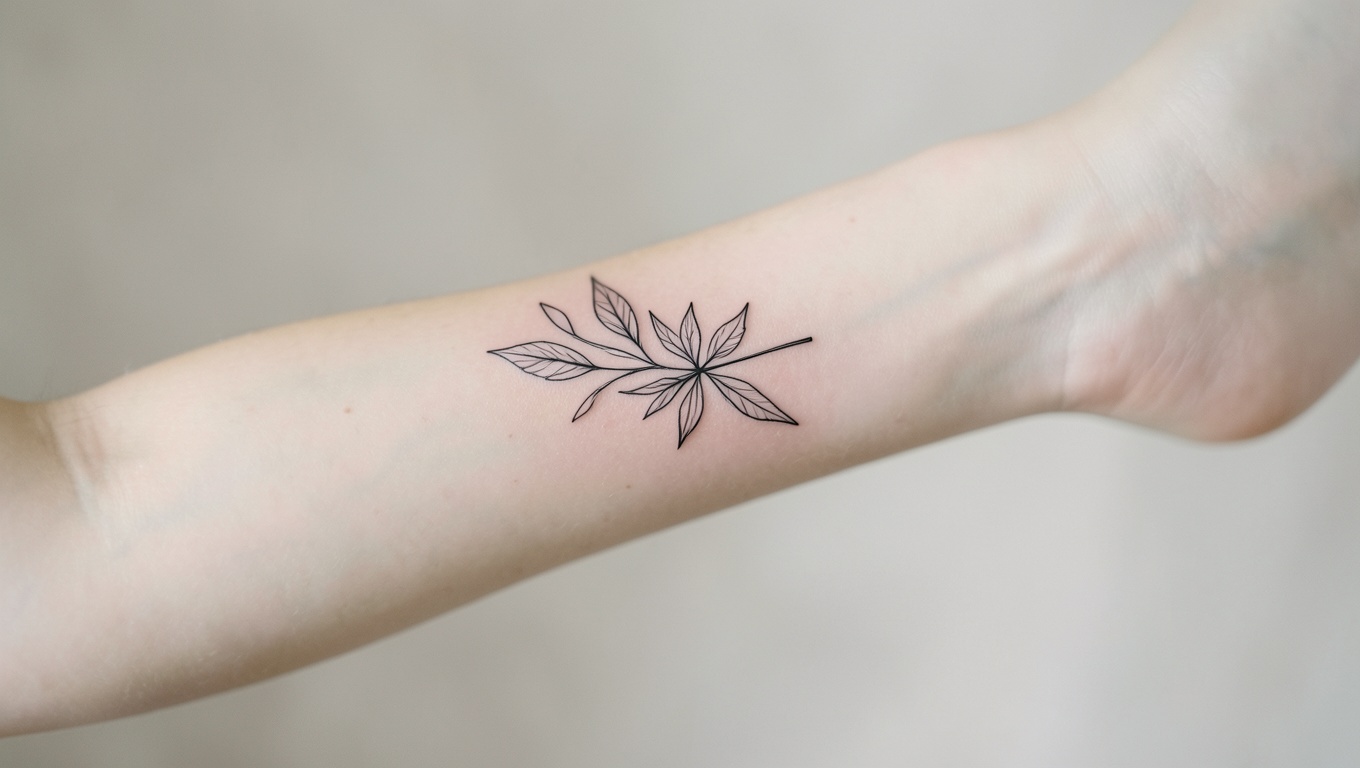
Fine line tattoos are beautiful and hugely popular, but they do fade and soften faster than bold work. Here is an honest look at what blurs and why, the fine-line pieces that actually hold up, and how to get one that lasts.
Why Tattoos Fade — and the Five Things That Actually Slow It
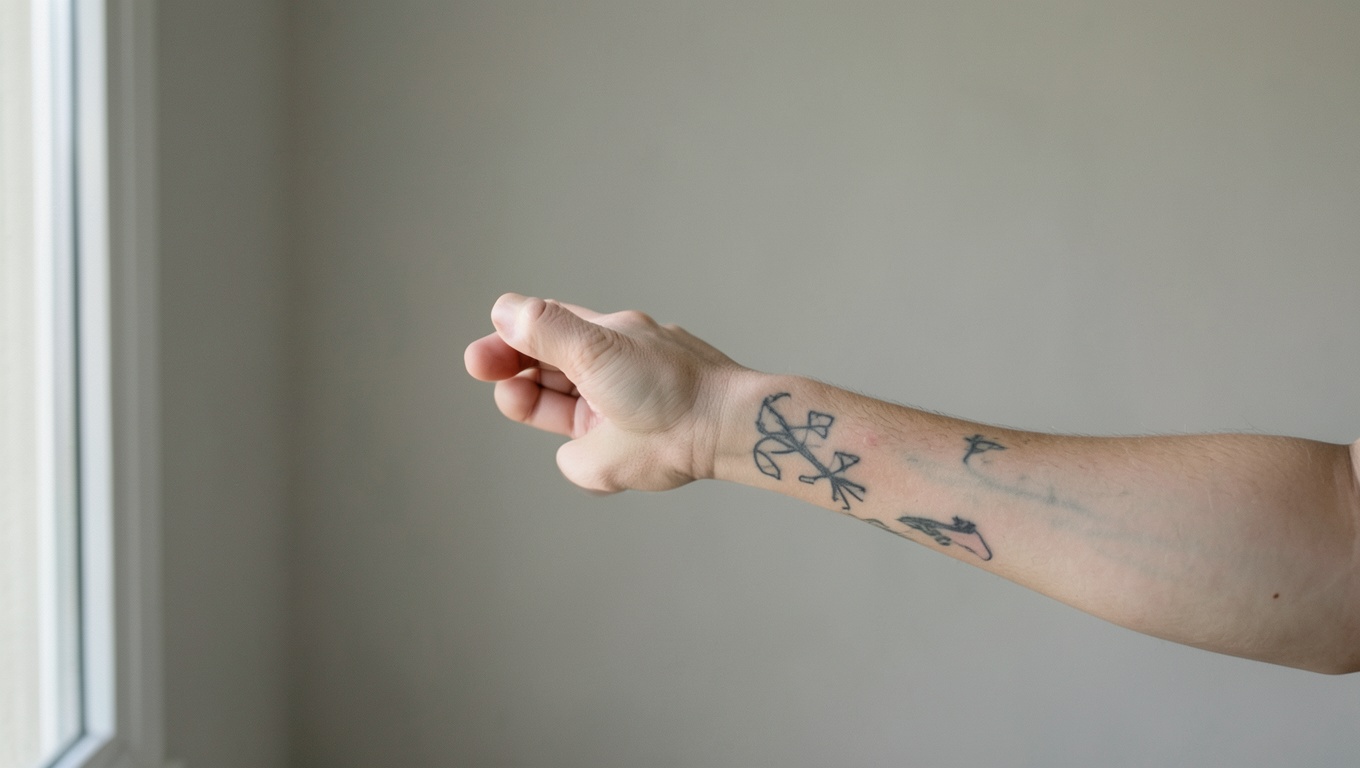
Every tattoo fades a little over time, but how fast is largely in your control. Here are the five real drivers of fading — sun, placement, colour, line weight, and skin — and what genuinely slows each one down.

Bringing an AI-Generated Design to a Tattoo Artist: What to Expect
AI tattoo designs are a great way to explore ideas, but they are a starting point, not a stencil. Here is what tattoo artists actually think, the real reasons an AI image often can’t be tattooed as-is, and how to use one well.
